
The Crowd-Phobic Republic
Egypt Security Sector Report

This week’s issue looks at the regime’s fear of unscripted public celebration, the militarization of crisis management, the proposed blank check for the Air Force-run business empire, renewed displacement in Sinai, and the continuing farce around Wataniya’s privatization. It also covers Israeli gas exports to Egypt, Egypt’s participation in military drills alongside Israel, new US Apache support funding, Rafale deliveries, refugee deportations, and deaths in custody.
A Heroes’ Welcome Without the People
Egyptians had every reason to be proud of their national team. The squad returned from the World Cup after a historic run, reaching the round of 16 for the first time and coming painfully close to eliminating Argentina. They led 2-0 until the closing stages before losing 3-2, in a match stolen by FIFA’s rotten refereeing culture. The sense of injustice only deepened public pride in a team that had exceeded expectations and deserved a real national celebration.
Instead, the regime turned the homecoming into another display of its fear of society. The players landed not in Cairo, where the crowds, the streets, and the emotional center of Egyptian football are, but at El Alamein, far from the dense urban public that made this achievement meaningful in the first place.
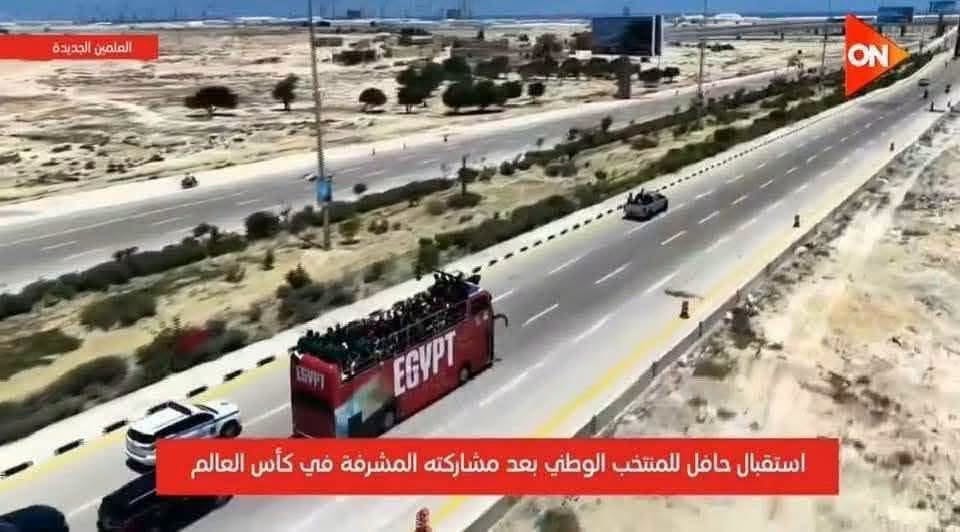
This was not logistical caution. It was political instinct. The Sisi regime is crowd-phobic. It fears any gathering it has not scripted, filtered, and policed into harmlessness. A genuine popular welcome in Cairo would have meant people moving, chanting, improvising, and occupying public space, even if only to celebrate football. For a regime built on emptying the streets of politics, that is already too much.
The farce is that Sisi wanted the glory without the people. He wanted the photo-op, the flags, and the nationalist dividend, but not the uncontrollable public presence that gives such moments their meaning. Egypt’s players deserved a heroes’ welcome. What they got was a regime reception in a sanitized coastal bubble.
The team showed courage. The state showed fear.
After the online backlash, the regime is now trying to repair the optics with a “popular” reception at Cairo Stadium today, complete with a Tamer Hosni concert. The “public” has been moved from the street into a managed arena, with attendance filtered through Tazkarti, the ticketing platform created under the GIS-linked United Media Services empire. Since 2019, Tazkarti has required fans to register with their full personal details, while stadiums were equipped with CCTV, facial recognition, and AI systems to police the crowd.
Crisis Management in Uniform
