
Reframing the Cold War in the Middle East
A Critical Review of 'The Soviet-Israeli War, 1967–1973'

This article is part of an ongoing series exploring the history of the Egyptian Air Force.
Isabella Ginor and Gideon Remez’s The Soviet-Israeli War, 1967–1973: The USSR’s Military Intervention in the Egyptian-Israeli Conflict is an ambitious attempt to reinterpret the Arab–Israeli conflict between the June 1967 War and the October 1973 War. The book advances a sweeping revisionist thesis: that the fighting along the Egyptian–Israeli front from 1967 to 1973 was not primarily an Arab–Israeli conflict supported by the superpowers, but rather a direct Soviet–Israeli war fought on Egyptian soil.
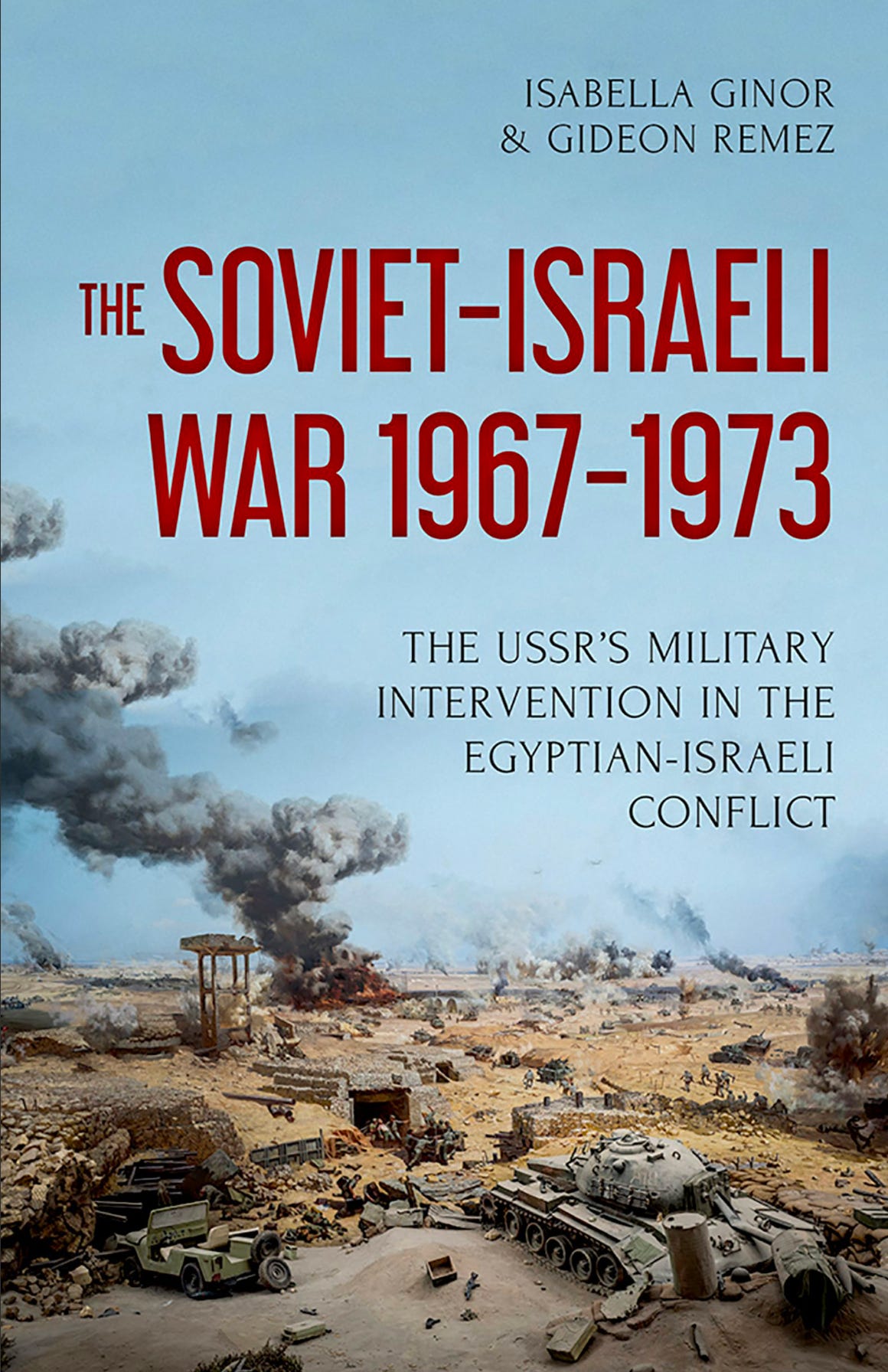
The authors are Israeli scholars and journalists affiliated with research institutions in Israel, and their work emerges from a broader Israeli historiographical tradition that has long examined the Cold War dimension of the Arab–Israeli conflict. Their background gives them particular familiarity with Israeli archival material, memoir literature, and military historiography. At the same time, that positionality inevitably shapes the vantage point from which the story is told. Throughout the book, the conflict tends to be framed primarily as a confrontation between Israel and the Soviet Union, while Arab actors often appear as secondary players whose decisions are interpreted largely through the prism of superpower rivalry.
The scale of the research effort behind the book is considerable. Over many years, Ginor and Remez assembled a large body of material drawn from Western archives, memoir literature, and especially post-Soviet accounts produced by veterans who served in Egypt during the late 1960s and early 1970s. The book attempts to reconstruct the operational role played by Soviet military personnel in Egypt during the War of Attrition. Soviet pilots flew combat missions, Soviet air defense units operated surface-to-air missile systems, and Soviet advisers played an important role in rebuilding Egypt’s armed forces after the devastating defeat of June 1967. By highlighting this dimension of the conflict, the authors challenge earlier scholarship that sometimes understated the operational significance of Soviet involvement.
Yet despite these contributions, the book ultimately fails to sustain its central argument. The claim that the period between 1967 and 1973 constituted a “Soviet–Israeli war” rests on a chain of interpretations that repeatedly stretch the available evidence beyond what it can bear. The result is a narrative that magnifies Soviet agency while diminishing the strategic autonomy of the regional actors who actually drove the conflict.
The first difficulty lies in the structure of the argument itself. From the outset, the book assumes the very conclusion it seeks to prove. The title declares that a Soviet–Israeli war took place, and the subsequent chapters largely proceed on the basis of that assumption. Rather than asking whether Soviet involvement transformed the conflict into a direct superpower confrontation, the authors treat that proposition as a given and marshal evidence accordingly. This approach inevitably produces confirmation bias. Evidence that appears to support the thesis is emphasized, while evidence that complicates it is either minimized or reinterpreted.
This tendency is particularly visible in the treatment of Soviet strategy. Ginor and Remez argue that Soviet policy toward the Middle East after 1967 was far more aggressive than previously assumed. According to their interpretation, the Kremlin sought not merely to support its Arab allies but to confront Israel directly and restore Soviet prestige after the humiliation of the Arab defeat. In this narrative, the War of Attrition becomes essentially a Soviet–Israeli confrontation conducted on Egyptian territory.
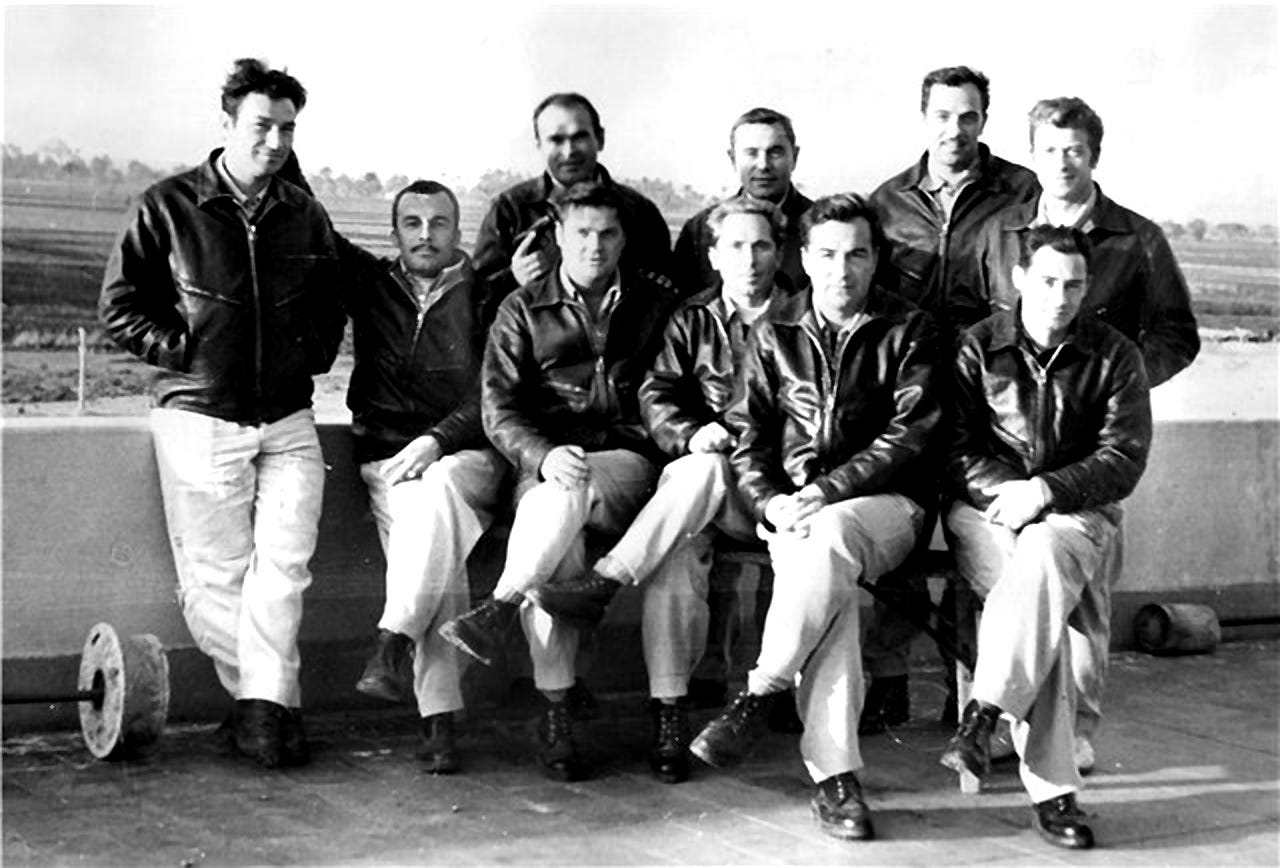
Such an interpretation exaggerates the degree to which Moscow controlled the course of events. Soviet policy in the Middle East was certainly motivated by the desire to maintain influence and restore credibility after 1967. But it was also constrained by the broader strategic logic of the Cold War. Throughout the period, the Soviet leadership remained acutely aware of the risks of direct confrontation with the US. Even when Soviet pilots and air defense units became involved in combat operations in Egypt, Moscow carefully limited escalation and avoided actions that might trigger a superpower crisis.
Equally problematic is the authors’ heavy reliance on memoirs and recollections by Soviet veterans. These sources undoubtedly provide fascinating insights into the experiences of Soviet personnel who served in Egypt and into the operational details of Soviet deployments. But memoir literature, especially when written decades after the events in question, must be treated with caution. Personal recollections are shaped by hindsight, by the desire to construct coherent narratives about past experiences, and often by institutional or political agendas.
Ginor and Remez acknowledge these limitations but nonetheless treat such accounts as central evidence for reconstructing Soviet strategy. Individual recollections are frequently used to support sweeping claims about high-level decision-making in Moscow. In effect, the experiences of participants on the ground are extrapolated into conclusions about the intentions of the Soviet leadership. This methodological leap is difficult to justify.


The book also devotes considerable attention to attacking earlier interpretations of the conflict, particularly those associated with prominent contemporary figures such as Mohamed Hassanein Haykal and Henry Kissinger. Ginor and Remez argue that memoir literature produced by these actors distorted the historical record and shaped subsequent scholarship in misleading ways. There is some validity to this critique. Early memoirs written by political insiders inevitably contain self-serving interpretations and selective omissions.
Yet the authors’ own approach does not entirely escape the same problem. In rejecting the narratives offered by figures like Heikal and Kissinger, Ginor and Remez sometimes replace one set of partial accounts with another drawn from equally subjective memoir sources. The result is not always a clearer reconstruction of events but rather a competing narrative shaped by different biases.
Perhaps the most problematic aspect of the book concerns its treatment of Arab agency. By framing the conflict primarily as a Soviet–Israeli confrontation, the authors implicitly reduce the role of Egypt and other Arab actors to that of secondary participants. Egyptian decisions are frequently interpreted as extensions of Soviet strategy rather than as the product of Egypt’s own political and military calculations.


This perspective obscures the central role played by Egyptian leadership in shaping the course of the conflict after 1967. The War of Attrition was initiated by Egypt under Gamal Abdel Nasser as a deliberate strategy to erode Israeli control of the Suez Canal line and rebuild Egyptian military confidence after the trauma of the June War. Egyptian commanders designed the operational concept of sustained artillery bombardment and limited offensive operations along the canal. Soviet assistance was crucial in rebuilding Egypt’s air defenses and providing advanced weaponry, but the strategic initiative remained Egyptian.
The authors’ interpretation of the 1972 expulsion of Soviet advisers illustrates this problem clearly. Ginor and Remez argue that the widely accepted narrative of a rupture between Cairo and Moscow is largely a myth. According to their account, the expulsion was essentially a deception in which Soviet formations were withdrawn while advisers allegedly remained in place and cooperation continued largely unchanged.
This reinterpretation rests on a selective reading of the evidence. While it is true that some Soviet personnel remained in Egypt after 1972, the expulsion involved thousands of advisers and represented a significant political move by the Egyptian leadership. Sadat sought to reassert control over Egyptian military decision-making while pressuring Moscow to provide more advanced weaponry. At the same time, he was signaling to Washington that Egypt was not irreversibly tied to the Soviet camp.
By dismissing the expulsion as a myth or deception, Ginor and Remez again interpret Egyptian policy primarily through the lens of Soviet strategy. Egyptian leaders appear not as independent actors pursuing their own objectives but as participants in a larger Soviet design.
Put bluntly, the book’s ethos can be reduced to a crude but persistent assumption: Arabs cannot fight, so it must have been the Russians.
This reading strips the episode of its political meaning and reinforces the book’s broader tendency to interpret regional events primarily through superpower rivalry.
More broadly, the denial of Arab agency that runs through the book reflects a deeper intellectual problem. By consistently explaining Arab military initiatives as the product of Soviet direction, the narrative reproduces a long-standing tendency in Israeli and Western writing on the Arab–Israeli wars to portray Arab actors as incapable of strategic initiative or institutional learning.
When Arab armies perform poorly, the explanation is attributed to their supposed deficiencies; when they rebuild, adapt, and fight effectively, the credit is assigned to external patrons. Such an interpretive framework is not merely analytically weak. It echoes an orientalist racist intellectual tradition in which Arabs are treated as passive instruments of larger forces rather than as historical actors in their own right.
The irony is that the period examined in the book demonstrates precisely the opposite dynamic. Between 1967 and 1973, Egypt undertook one of the most remarkable military recoveries of the twentieth century. Egyptian planners rebuilt their armed forces, developed new operational concepts, and constructed the air defense system that would enable the crossing of the Suez Canal in October 1973. Soviet assistance was important in this process, but it did not substitute for Egyptian tactical innovation, strategic thinking, or decision-making.
In the end, The Soviet-Israeli War, 1967–1973 is best understood as a provocative but flawed revisionist interpretation.
Excellent review ya Hamalawy. The book is intriguing because of the interviews the authors conducted with Soviet veterans of operations Kavkaz. But the books is ultimately flawed for the reason you clearly articulated: an inability to acknowledge the remarkable Egyptian achievement in rebuilding their armed forces is such a fundamental manner and in such a short period following the harrowing defeat of 67. And this inability to acknowledge Arab agency, in turn, is deeply rooted in Israeli hubris, conceit and racism.
Great review. I doubt it is still as flawed a revisionist history as Alex Rowell's We Are Your Soldiers.