
From Cairo to Chengdu
The Cold War Origins of China–Egypt Aviation Cooperation

This article is part of a series exploring the history of the Egyptian Air Force.
China–Egypt aviation cooperation has rarely attracted sustained attention in military or diplomatic histories. Yet during the Cold War, Cairo played a quiet but important role in the development of China’s modern aerospace industry. Through aircraft transfers, procurement deals, and joint industrial projects, Egypt became one of Beijing’s earliest partners in the international aviation market.
These exchanges unfolded during a turbulent period in Egyptian foreign policy. During the 1970s, Cairo was redefining its strategic alliances and gradually moving away from exclusive dependence on the Soviet Union. At the same time, China was cautiously entering the global arms market with export versions of its Soviet-derived aircraft. By the late 1970s, the interests of the two countries converged. Egypt needed aircraft that could be delivered quickly and maintained relatively easily, while China needed credible international customers for its aviation industry.
Although often overshadowed by Egypt’s later military relationship with the US, the Chinese connection played a distinct role during a transitional phase in the modernization of the Egyptian Air Force.
Egypt’s Post-1967 Strategic Dilemma
Egypt entered the 1970s confronting a severe military imbalance. The June 1967 Arab–Israeli War had exposed the vulnerability of the Egyptian Air Force and highlighted the limits of its Soviet-supplied equipment. Israel’s growing access to advanced Western aircraft, particularly the American F-4 Phantom II, introduced radar, missile, and electronic warfare capabilities that Egyptian pilots struggled to match.
During the War of Attrition between 1967 and 1970, Egyptian planners repeatedly pressed the Soviet Union for more advanced fighters. The aircraft most desired by Cairo was the MiG-23, a next-generation interceptor that introduced several significant innovations, including variable-geometry wings and improved radar systems designed for high-speed interception.
Moscow hesitated. Soviet leaders were reluctant to transfer their newest aircraft and wary of escalating tensions in the region. Negotiations dragged on while the political relationship between Egypt and the Soviet Union deteriorated. In July 1972, President Anwar el-Sadat expelled thousands of Soviet advisers and military personnel from Egypt, crippling the close military partnership that had existed since the 1950s.
Although small numbers of MiG-23 aircraft were eventually delivered to Egypt in 1974 following renewed arms agreements—reportedly aided by Syrian mediation—after the October 1973 war, the earlier disputes had already exposed the fragility of the Soviet-Egyptian military relationship. In the second half of 1974, the Soviet Union supplied eight MiG-23MS interceptors, eight MiG-23BN fighter-bombers, and four MiG-23UB trainers to the Egyptian Air Force. The aircraft were based at Cairo West Air Base and assigned to No. 47 Squadron.
Cairo still needed aircraft, but its primary supplier had become politically unreliable. Egypt, therefore, began exploring alternative sources of military equipment. One of the countries that stepped into this gap was China.
Technology Transfers and the MiG-23 Connection
Egypt’s changing procurement strategy produced an unexpected consequence. Cairo became an indirect channel through which Soviet aviation technology reached China.
Around 1978, Egypt transferred six MiG-23 aircraft to China. These included two MiG-23MS tactical fighters, two MiG-23BN fighter-bombers, and two MiG-23UB combat trainers. The aircraft had originally been supplied by the Soviet Union but had fallen out of favor in Egyptian service as Cairo restructured its air force and diversified its suppliers.
The fleet’s operational career in Egypt was also troubled. During a formation take-off at Matrouh, an engine fire warning triggered confusion among the pilots and caused a chain reaction of aborted take-offs and ejections that resulted in several aircraft colliding and being destroyed on the runway. The accident further weakened the already small MiG-23 fleet and contributed to the aircraft’s withdrawal from Egyptian service by the mid-1970s, particularly as Egypt was simultaneously acquiring large numbers of Mirage 5 fighters from France.
For Chinese engineers, however, the acquisition was extremely valuable. The MiG-23 represented a significant leap forward compared with earlier Soviet aircraft that China had studied or copied. Its variable-geometry wings allowed the aircraft to adjust aerodynamic performance for different flight regimes, while its avionics and radar systems reflected a newer generation of fighter technology.
Chinese aerospace specialists examined the aircraft in detail, studying its airframe structure, wing mechanisms, avionics architecture, and overall aerodynamic layout. Although China never produced a direct copy of the MiG-23, access to these aircraft provided valuable insight into contemporary Soviet fighter engineering and influenced later Chinese design work. Other Egyptian MiG-23 aircraft were reportedly acquired by the US Air Force’s Foreign Technology Division for evaluation, illustrating how Egypt’s shifting alliances turned Soviet equipment into valuable intelligence for multiple Cold War powers.
China’s Entry Into the Global Aircraft Market
During the 1970s, China was beginning to expand its presence in the international arms market. The country’s aviation industry had been built largely on Soviet designs transferred in the 1950s, but Chinese manufacturers were increasingly adapting these aircraft for export.
One of the most important export models was the Shenyang F-6 fighter, the export version of the Chinese J-6 aircraft derived from the Soviet MiG-19. Although the MiG-19 had already been superseded in many air forces, China continued producing upgraded versions and offered them to foreign customers at competitive prices.
For countries like Egypt, the aircraft represented a practical solution. The Egyptian Air Force needed fighters that could expand its fleet quickly and maintain operational readiness while the country reorganized its procurement strategy. Chinese aircraft were relatively inexpensive, mechanically straightforward, and compatible with many Soviet weapons already used by Egyptian pilots.
Archival records from US diplomatic conversations indicate that Chinese assistance also extended to sustaining Egypt’s existing Soviet-origin fleet. During a meeting with US President Jimmy Carter in April 1977, Sadat explained that China had supplied Egypt with 30 MiG-17 engines free of charge, along with spare parts for older aircraft whose maintenance had become difficult after Soviet support declined. Sadat noted that China was producing its own versions of the MiG-17 and MiG-21 and had become a useful alternative source of equipment and technical support at a time when Cairo’s relationship with Moscow remained strained.
Chinese assistance also reached the bomber fleet. The Egyptian Air Force still operated Soviet-built Tupolev Tu-16 bombers, known to NATO as Badgers, while China had developed its own license-built version of the same aircraft, the Xi’an H-6.
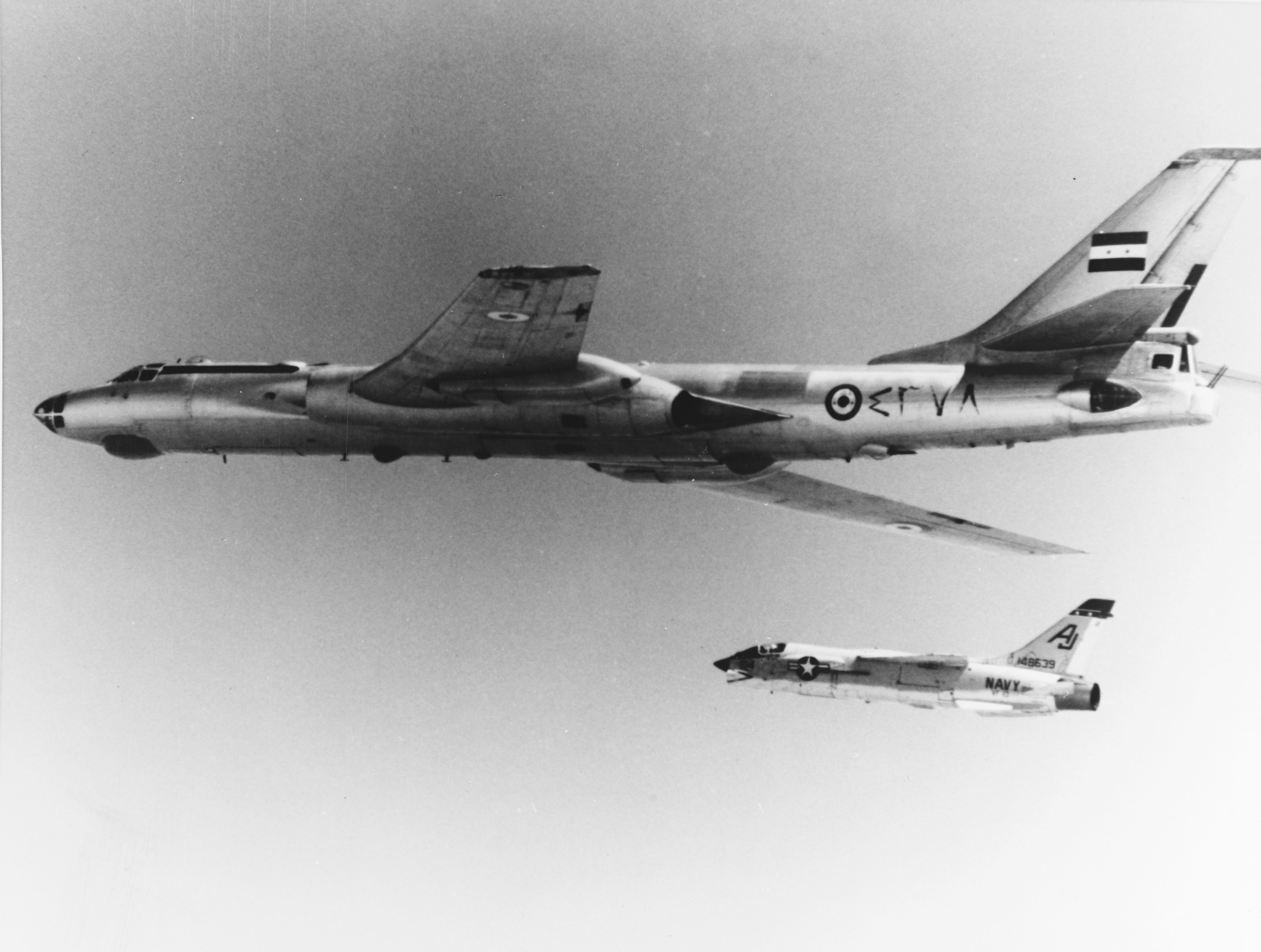
As Soviet support dried up, Beijing reportedly became Cairo’s main source for Tu-16/H-6 spare parts, helping keep Egypt’s Badger G variant operational. Egypt also acquired a small number of H-6 bombers, which reportedly flew combat sorties during the four-day border war with Libya in July 1977. This appears to have been the H-6’s only known use in combat anywhere. Egypt eventually retired the type in 2000, but the bomber marked an early phase of direct aviation cooperation between Cairo and Beijing.
The Shenyang F-6 Fighter Deal
Egypt’s most significant purchase from China came at the end of the 1970s with the acquisition of the Shenyang F-6 fighter. Although technologically less sophisticated than newer Western fighters entering Egyptian service, the F-6 offered several practical advantages. It was relatively easy to maintain, could operate from austere airfields, and was compatible with existing Soviet-style weapons.
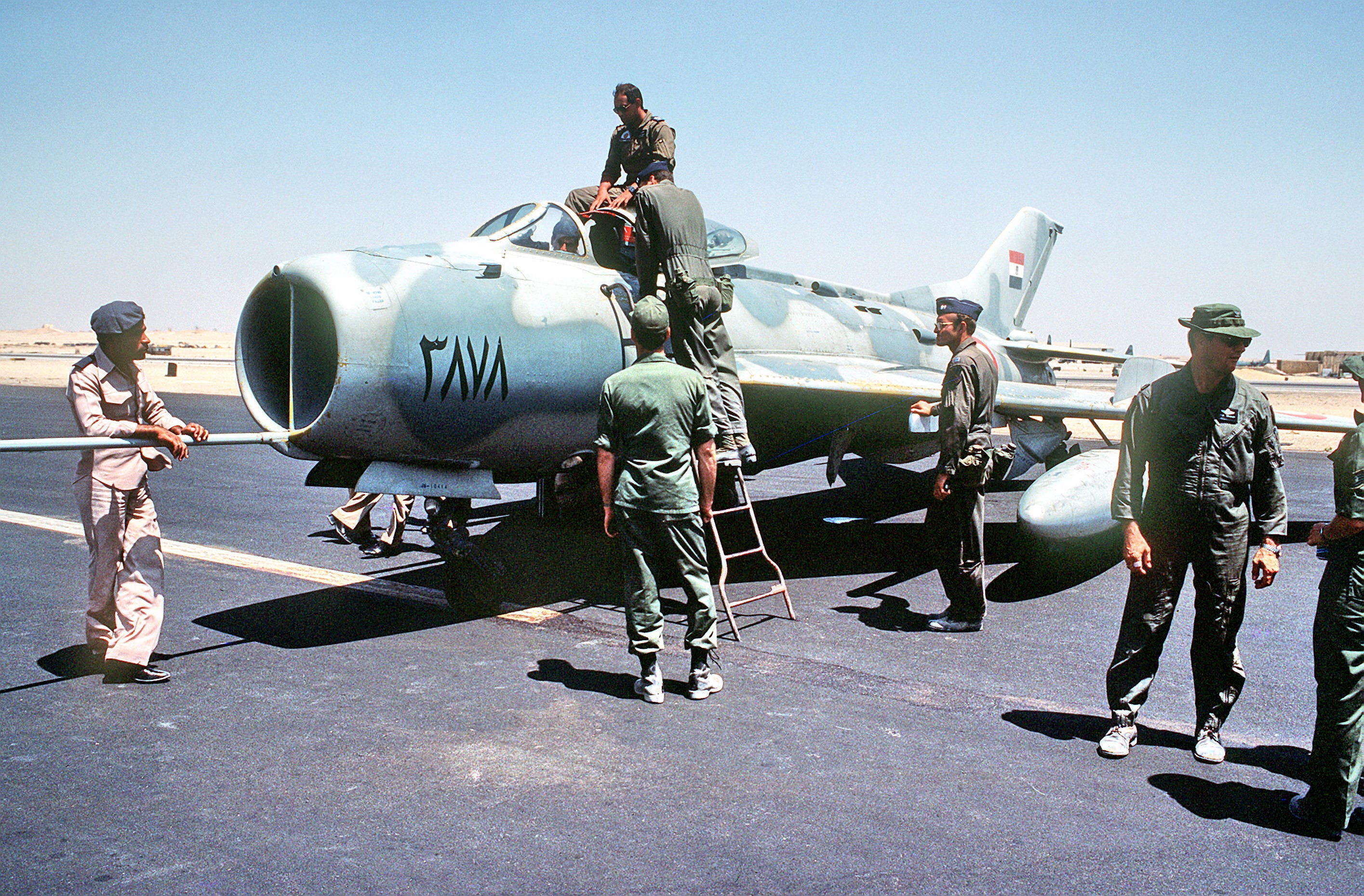
China delivered dozens of these aircraft to Egypt along with two-seat trainer variants. Within the Egyptian Air Force, the F-6 served primarily as a fighter-bomber and training platform. In several units, it replaced older Soviet aircraft such as the Su-7 fighter-bomber and supplemented MiG-21 squadrons.
For China, the deal carried significant symbolic value. Egypt possessed one of the largest and most influential air forces in the Middle East. Securing Egyptian orders helped demonstrate that Chinese aircraft could compete in international markets and operate effectively outside China’s own military system.
The Chengdu F-7 Fighter
In the early 1980s, the Egyptian Air Force became the launch export customer for the Chengdu F-7B fighter, an improved Chinese derivative of the Soviet MiG-21. Egypt and Iraq reportedly received around 90 aircraft in deliveries beginning in 1982–83.
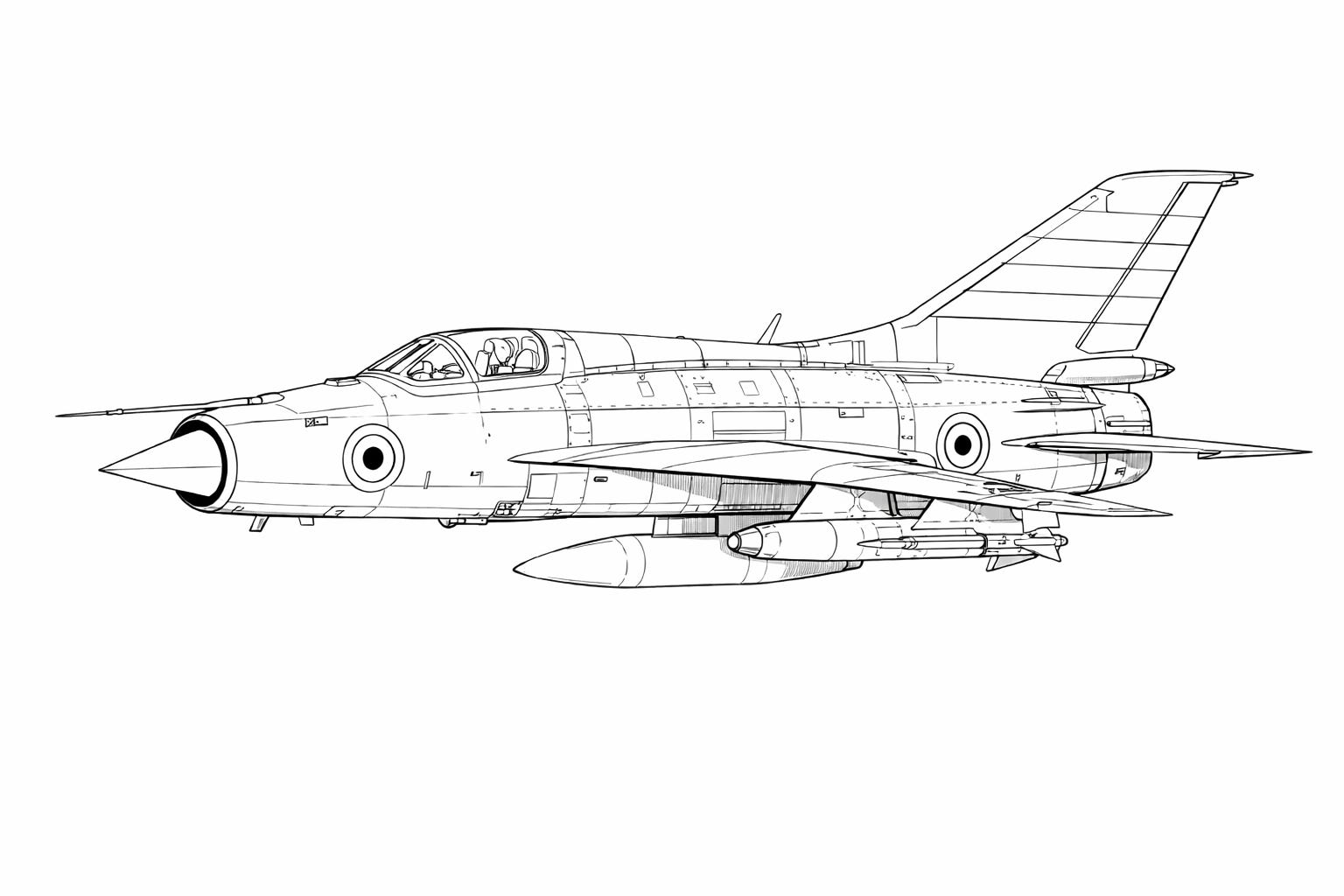
The F-7B incorporated several improvements compared with earlier J-7 variants, including revised fuel capacity, upgraded engines, and compatibility with the Chinese PL-7 air-to-air missile. For Beijing, the Egyptian order represented an important milestone, demonstrating that China could market a more modern fighter aircraft internationally.
Later references suggest that Egyptian F-7B fighters remained operational in several tactical fighter units into the 2010s. Aircraft were reportedly based at Matruh, while additional squadrons operated within the 282nd Tactical Fighter Wing at Fayed alongside MiG-21 and F-16 units.
Joint Development and the K-8 Trainer
By the 1980s, China–Egypt aviation cooperation had evolved beyond aircraft sales and technology transfers into industrial collaboration. The most important example of this partnership was the development of the Hongdu K-8 Karakorum jet trainer, later produced in Egypt as the K-8E.
Designed as both a basic and advanced training aircraft, the K-8 was developed jointly by Chinese and Egyptian partners. Egyptian aerospace facilities associated with the Arab Organization for Industrialization participated in the program, with production taking place at AOI facilities in Helwan.


Initial aircraft were manufactured in China, but later batches were assembled in Egypt using knock-down kits supplied by Chinese manufacturers. Over time, production incorporated increasing levels of locally manufactured components. By the final stage of the program, Egyptian industry reportedly achieved approximately ninety-five percent local manufacturing content for the remaining aircraft.
The K-8 program revived an element of Egypt’s aerospace manufacturing capacity that had declined after earlier joint aircraft projects with European partners collapsed. For China, the aircraft became one of the most successful trainer exports in its aviation history, eventually serving in numerous air forces across Africa, Asia, and Latin America.
Strategic Implications
Chinese aircraft played a critical role during a transitional phase in the modernization of the Egyptian Air Force. As Cairo began shifting away from exclusive dependence on Soviet arms in the 1970s, Chinese fighters and bombers provided aircraft that could be delivered quickly and integrated with many of the Soviet weapons and maintenance practices already familiar to Egyptian crews. In this sense, Chinese equipment helped bridge the gap between Egypt’s earlier Soviet inventory and the Western aircraft that would begin entering service later in the decade.
For China, the partnership offered significant advantages. Egypt was one of the largest and most influential air forces in the Middle East, providing Beijing with both a prestigious export customer and valuable operational feedback on its aircraft. Egyptian adoption of Chinese platforms also helped legitimize China’s aviation industry in international markets at a time when Beijing was only beginning to emerge as a global arms supplier.
At the same time, Egypt’s broader strategy of diversifying its suppliers eventually produced a highly heterogeneous fleet. By the 1980s and 1990s, the Egyptian Air Force operated aircraft sourced from the US, Russia, China, France, Britain, Italy, Brazil, the Czech Republic, and Germany. While this approach reduced dependence on any single supplier, it also complicated logistics, maintenance, training, and operational interoperability within the corps.
Sources
Aloni, Shlomo. Arab-Israeli Air Wars 1947–1982. Oxford: Osprey Publishing, 2001.
Bock, Robert. Tu-16 Badger in Action. Aircraft in Action, Aircraft Number 108. Squadron/Signal Publications, 1990.
Cooper, Tom. MiG-23 Flogger in the Middle East: Mikoyan i Gurevich MiG-23 in Service in Algeria, Egypt, Iraq, Libya and Syria, 1973–2018. Solihull, UK: Helion & Company, 2018.
Gordon, Yefim, and Dmitriy Komissarov. Chinese Aircraft: China’s Aviation Industry Since 1951. Leicester, UK: Hikoki Publications, 2008.
Memorandum of Conversation, “President’s Meeting with President Anwar Sadat of Egypt,” Washington, 5 April 1977. In Foreign Relations of the United States, 1977–1980, Volume VIII: Arab-Israeli Dispute, January 1977–August 1978, Document 27. Washington, DC: US Department of State, Office of the Historian.
Newdick, Thomas, and Tom Cooper. Modern Military Airpower: 1990–Present. London: Amber Books, 2010.