
Empire in the Mirror
A book about Sudan. A book about power

This book review is part of a series on the history of the Egyptian army in Sudan.
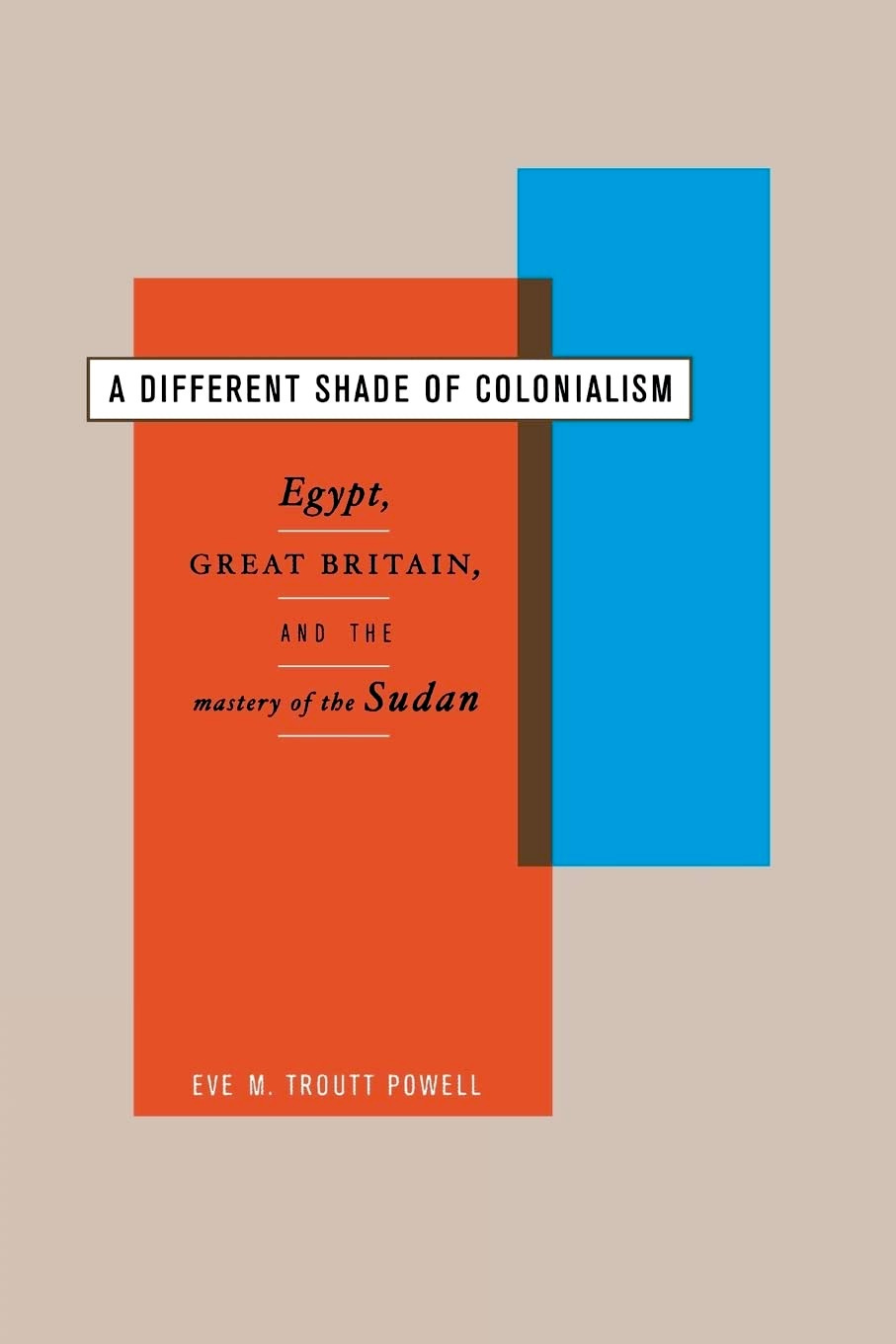
Eve M. Troutt Powell’s A Different Shade of Colonialism: Egypt, Great Britain, and the Mastery of the Sudan, published by the University of California Press in 2003, is one of the sharpest books written on the triangular relationship among Egypt, Britain, and Sudan.
It is not simply a study of British rule in Egypt, nor just a study of Egypt’s loss of Sudan. It is a study of how a colonized society could also imagine itself as a colonizer, and how that contradiction shaped Egyptian nationalism from the nineteenth century into the early twentieth.
Powell’s central argument is blunt: Egyptian nationalism was not formed only in resistance to British occupation. It was also formed through claims to mastery over Sudan.
That argument still lands with force because it cuts against an old and comfortable nationalist story. In that story, Egypt appears only as victim, always on the receiving end of European domination. Powell does not deny British violence or imperial arrogance for a second. She starts from it. But she insists that Egyptian elites, officers, writers, and politicians also projected power southward, and that Sudan was not some side issue or diplomatic appendage. It sat at the center of how many Egyptians imagined the nation, the state, and their own civilizing mission.
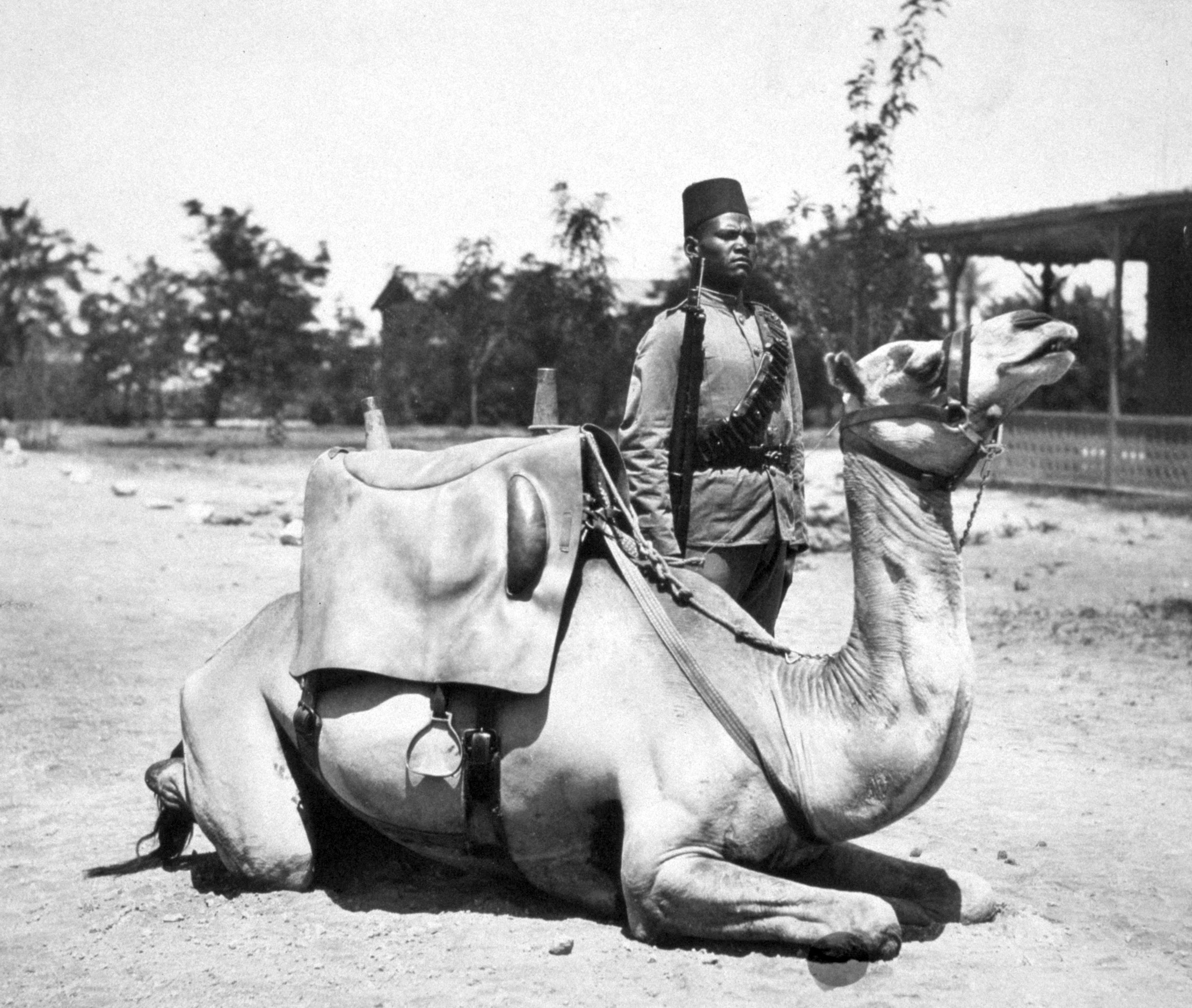
Powell shows that the Egyptian military was not merely one institution among others. It was one of the main vehicles through which Egypt experienced Sudan as a field of conquest, service, punishment, ambition, and frustrated sovereignty.
Egyptian officers sought promotion in Sudan, served in mixed environments with Sudanese troops, and experienced the Mahdist revolt not only as a strategic defeat but as a personal and national humiliation. The military, in her account, was both an instrument of Egyptian colonialism and one of the social groups most bruised by Britain’s occupation of Egypt and the loss of Sudan.
The Book’s Core Intervention
Powell builds her study around a powerful formulation: the “colonized colonizer.” She argues that Egyptian nationalism developed not in a simple colonizer-colonized binary but within a layered triangle shaped by Ottoman rule, British occupation, and Egyptian domination in Sudan. Egypt was under British control after 1882, but it had also ruled Sudan since 1821, and many Egyptian nationalists treated Sudan as Egypt’s natural possession. The result was a political language in which anti-colonial protest toward Britain coexisted with proprietary, often paternalistic, claims over Sudan.
Powell is not just revising a few details in the historiography. She is attacking the conceptual laziness of any framework that casts Egyptians only as objects of empire. Her critique of the broader postcolonial literature, especially approaches too trapped in a Europe-versus-East binary, is one of the strongest parts of the introduction. She argues that Egyptians did not just absorb imperial discourse from Europe. They generated their own language of hierarchy, race, and civilization when speaking about Sudan and Sudanese people.
Armies do not operate on force alone. They carry vocabularies of superiority, backwardness, mission, reform, and punishment. Powell’s book is not a campaign history. She is after the mental world that made conquest legible and desirable to Egyptian elites, including officers. She wants to know how Egyptians talked themselves into empire even while living under occupation.
Sudan in the Making of the Egyptian Officer
The book makes clear that Sudan was deeply embedded in the institutional life of the Egyptian military long before the Anglo-Egyptian condominium. Powell notes that many Egyptians served in the army stationed in Sudan and found there opportunities for promotion that were hard to secure in Egypt itself in the 1860s and 1870s. Mehmed Ali and his successors repeatedly tried to create Sudanese battalions, and Egyptian and Sudanese soldiers trained alongside one another in Upper Egypt. Sudan was feared by some Egyptian notables as a place of exile, but it was also treated as an intrinsic part of Egypt’s political world.
That point deserves emphasis. Too often, Sudan appears in Egyptian narratives as a distant possession administered by khedival fiat and European adventurers. Powell restores the more grounded reality that the conquest and administration of Sudan had an Egyptian human infrastructure. Soldiers, junior officers, teachers, bureaucrats, and functionaries moved through that space. They carried their assumptions with them, but they were also shaped by what they saw there. Sudan was not abstract. It was a military posting, a ladder, a punishment, and a proving ground.
She then places the Egyptian officer corps inside the shocks of the early 1880s. Egyptian officers were already in revolt over promotion, pensions, back pay, and the domination of senior ranks by Turco-Circassian officers. At the same moment, Muhammad Ahmad’s Mahdist movement was rising in Sudan against what he called the “Turkish” administration. Powell’s juxtaposition is brilliant. It shows two rebellions erupting against overlapping but different structures of rule, one in Egypt and one in Sudan, while Britain moved to crush one and exploit the other.
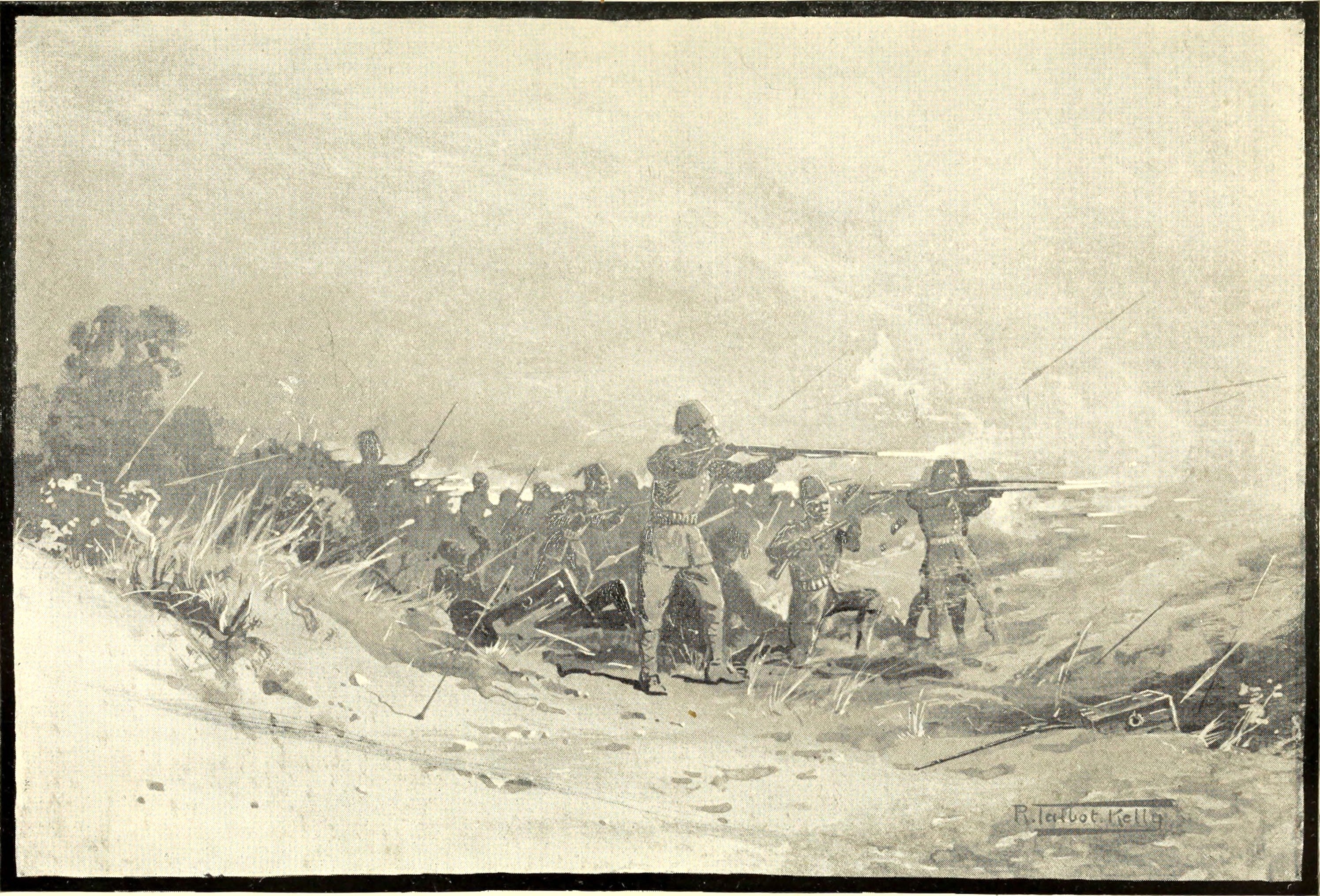
The result was catastrophic for Egyptian officers. Britain occupied Egypt in 1882. The Mahdi’s forces took control of most of the Sudan soon after. Powell captures the compressed violence of that moment well. Egyptian soldiers experienced not just the occupation of their homeland but the collapse of an imperial frontier in which many of them had served for years. For military men, the loss of Sudan was the loss of command, prestige, and career, all wrapped inside the larger loss of sovereignty at home.
Ibrahim Fawzi and Soldier’s View of Empire
The book’s military heart lies in the chapter on Ibrahim Fawzi, and it is the section that lingers longest. Fawzi is exactly the kind of figure historians should care about more than they usually do: an Egyptian officer whose life runs through the contradictions of empire. He first served in Sudan under Charles Gordon, rose high enough to become governor of the Equatorial Provinces in 1877, returned to Cairo, joined the disaffected officers around Urabi, then went back to Sudan after the failure of the Urabi revolt and Britain’s occupation of Egypt. He served as Gordon’s aide-de-camp in Khartoum, was captured after Gordon’s death, spent 14 years imprisoned under the Mahdists, and later wrote al-Sūdān bayna yaday Gurdūn wa Kitshinir (The Sudan under Gordon and Kitchener).
Powell reads Fawzi with great intelligence. She does not treat him as a transparent witness. She treats him as a deeply contradictory one. He opposed British occupation, yet fully embraced a hierarchy of civilizations in which “advanced” societies had both the right and the duty to civilize supposedly lesser ones. In his world, empire could still be patriotic if the empire was Egyptian. That is the key. Fawzi embodies the paradox of an Egyptian nationalist who is simultaneously an agent of colonial rule in Sudan.
Fawzi’s memoir is not valuable only because it offers recollections from the field. It exposes the moral grammar of Egyptian military service in Sudan. The officer is not simply fighting rebels. He is carrying civilization, defending order, and participating in the making of the nation. That nation, crucially, includes Sudan under Egyptian authority. The military imagination here is expansionist, paternalist, and national all at once.
Powell also writes about Egyptian soldiers, whose political loyalties had first been stirred by Urabi and then dashed by the British, experiencing the loss of Sudan with particular intensity. Thousands had served there and knew the region well. The defeat was intimate. It was not the newspaper abstraction of a lost province. It was the collapse of a world many of them had inhabited.
At the same time, Powell does not romanticize Fawzi. She shows the limits of his knowledge and the arrogance embedded in his categories. He generalized “Sudanese” in ways that flattened local distinctions and ignored how people in Sudan named themselves and each other. Even a man who knew Sudan firsthand, married a Sudanese woman, and endured long captivity there could still reproduce colonial simplifications. That is one of Powell’s hardest truths: proximity did not cure domination. Sometimes it made it more intimate.
Nationalism, Race, Slavery
The opening chapters on slavery and domestic service are not military history in the narrow sense, but they are essential to understanding the military dimension. Powell begins with the 1894 trial over six Sudanese women sold into slavery in Egypt. That trial, heard in a military tribunal under British supervision, becomes her lens into larger questions of sovereignty, race, and empire. Egyptian defenders of the buyers argued that Sudanese slaves were being uplifted and civilized in Egyptian households. British officials used the case to present Egyptians as unfit to govern themselves. Sudanese women’s bodies became the terrain on which both Egyptian and British claims to legitimacy were staged.
The military relevance is not incidental. The tribunal itself was military, but more importantly, the case exposes the ideological overlap between domestic slavery and imperial governance. The same paternal language used to justify mastery in the home could be scaled up to justify mastery over Sudan. Powell’s argument is that family, household, race, and empire were not separate conversations. They fed each other. That is exactly why military conquest could be narrated as care, discipline, reform, and rescue.
Powell also avoids the lazy move of forcing everything into a European template, but she does not let Egyptian nationalists off the hook. She shows that late 19th-century Egyptian writers were acutely aware of racial discourse and mobilized it in discussing Sudan and Sudanese people. Her point is not that Egyptian nationalism was identical to European racism. It is that it developed its own racialized language of hierarchy under colonial conditions. For a historian of the army, this matters because armies sort populations, attach value to loyalty and discipline, and convert cultural stereotypes into administrative practice. Powell gives you the ideological atmosphere in which that happened.
The Limits of the Book
The book is outstanding, but it is not beyond criticism. The most obvious point is that it is more a work of intellectual and cultural history than of institutional military history. Readers looking for battalion structures, operational detail, logistics, recruitment patterns, or the day-to-day mechanics of military occupation will not find much of that here. Powell is not writing a history of the Egyptian army in Sudan in the narrow professional sense. She is writing a history of how empire lived in language, memory, representation, and nationalist thought.
That means the book sometimes leaves the institutional machinery slightly blurred. One comes away with a vivid grasp of the Egyptian military as a site of frustration, ambition, and symbolic investment, but less with a thick account of how military rule functioned on the ground across different regions of Sudan. For your purposes, that is not a fatal weakness. It just means this book works best as a framing text, not as the only source.
A second limitation is one Powell partly acknowledges herself. Much of the evidence comes from elite writing: memoirs, newspapers, theater, political commentary. She works hard to recover Sudanese voices and to show how Egyptian representations often silenced them, but the archive still tilts toward those who had the power to publish. The result is analytically rich, yet at times you can feel the absence of more granular Sudanese military perspectives, especially from rank-and-file soldiers and local communities exposed to Egyptian coercion.
Still, these limits do not diminish the book’s importance. They clarify its mission. Powell is after the architecture of thought that made colonial power possible. On that front, she is relentless.
A Brutal Mirror for Egyptian Nationalism
A Different Shade of Colonialism remains indispensable because it refuses innocence. It refuses the innocence of British liberal empire, which draped domination in abolitionist righteousness. It also refuses the innocence of Egyptian nationalism, which too often cast Sudan as inheritance, property, or younger sibling rather than as a society with its own political claims. Mustafa Kamil’s blunt insistence that Sudan was “a piece of Egypt,” and that the Egyptian army could have retaken it, captures the mood Powell is dissecting with cold precision.
For anyone studying the Egyptian military in colonial Sudan, that is the real payoff. Powell helps explain why military service in Sudan mattered so much in the Egyptian political imagination. Sudan was not just territory. It was a theater where officers could rise, where nationalist humiliation was felt, and where empire could be recast as patriotism. The same officer corps that resented exclusion and subordination at home could still imagine rule over Sudan as natural, restorative, and civilizing. That contradiction was not marginal. It was structural.