
Back to the Beginning
1948, Trial by Fire for a Half-Built Air Force

This article is part of a series exploring the history of the Egyptian Air Force.
For readers who have followed this series through the revolutionary years, the Nasser era, the wars of the 1960s and 1970s, and the remaking of the Egyptian Air Force into the institution that entered the 1980s, this volume offers a rewarding return to the origin of the story. The names on the cover will already be familiar from earlier reviews in this series: David C. Nicolle, the prolific British military historian of Middle Eastern warfare, and the late Air Vice Marshal Gabr Ali Gabr, an Egyptian air power scholar and veteran officer whose career stretched from flying Vampires in 1956 to senior operational and academic posts, followed by a long writing life on Egyptian air warfare. In this twelfth volume of Air Power and the Arab World, they bring the reader back to 1948, to the hard, improvised battlefield where the Royal Egyptian Air Force (REAF) was still discovering itself as a fighting force.
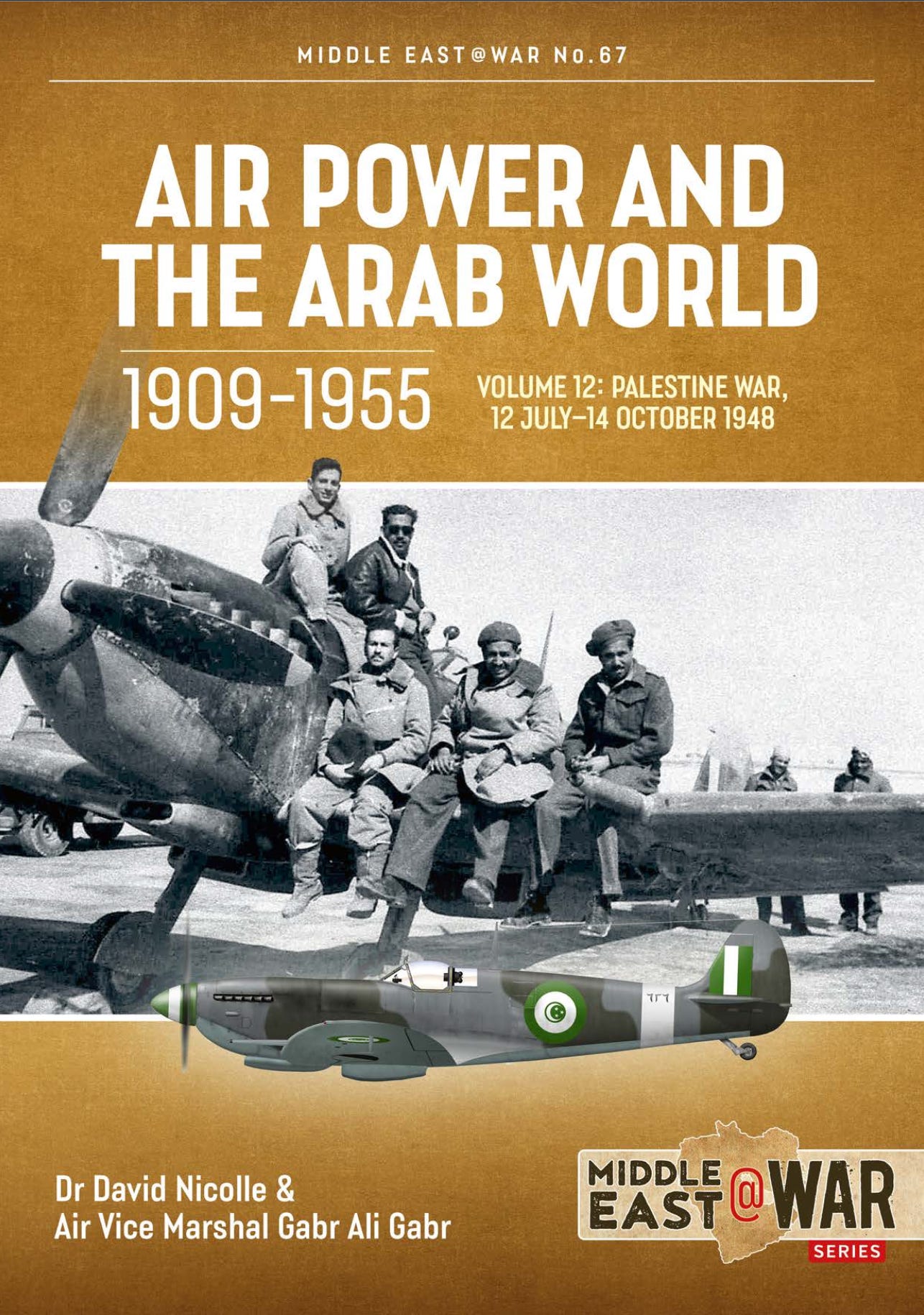
Air Power and the Arab World 1909-1955, Volume 12, is not just another installment in a long-running series. It feels like a recovery operation. The book gathers a scattered archive of combat reports, operational diaries, memoir fragments, interviews, communiqués, private correspondence, and rare imagery, then turns them into a remarkably vivid account of Arab air operations during one of the decisive phases of the 1948 war. Its real achievement lies in restoring Egyptian, Arab Legion, Iraqi, and Syrian agency to a campaign too often flattened into a one-sided story.
This is a military history book, yes, but it is also a book about institutional birth. Anyone interested in the Egyptian Air Force as a fighting service, as a bureaucracy, as a professional culture, and as a national mythmaking machine will find an extraordinary amount here. The volume captures a force that is still half-built, still improvising doctrine in the air, still learning command flexibility in real time, and still producing the pilots and operational habits that would echo far beyond Palestine.
A Chronicle Built on Detail
The most striking quality of the book is its granularity. Nicolle and Gabr avoid sweeping generalizations, instead reconstructing events with close attention to timing, movement, and operational detail. The war becomes tangible. We are not given a distant summary of “Egyptian air activity.” We are shown aircraft taking off from al-Arish at specific hours, armed with high-explosive and incendiary bombs, heading toward Aqir, Negba, Kfar Warburg, Wilhelma, and other targets, then returning to report what they thought they had hit.
This approach gives the narrative its force. It allows the reader to grasp tempo, pressure, and uncertainty in a way broader political histories rarely manage. On 12 July alone, the REAF launched eleven sorties from al-Arish without loss. Much of that effort was tied to the Egyptian assault on Negba, while other sorties supported operations farther north and west. The day unfolds not as a blur, but as an exhausting sequence of missions, reports, revisions, and rapid decisions.
One of the pleasures of the book is that the authors never lose their critical distance. They plainly admire the courage and persistence of Egyptian aviators, but they do not surrender to mythmaking. Egyptian communiqués are set beside operational diaries, interviews, later recollections, and opposing accounts. When claims sound inflated, the authors say so. That discipline strengthens the book. It gives the narrative authority without draining it of drama.
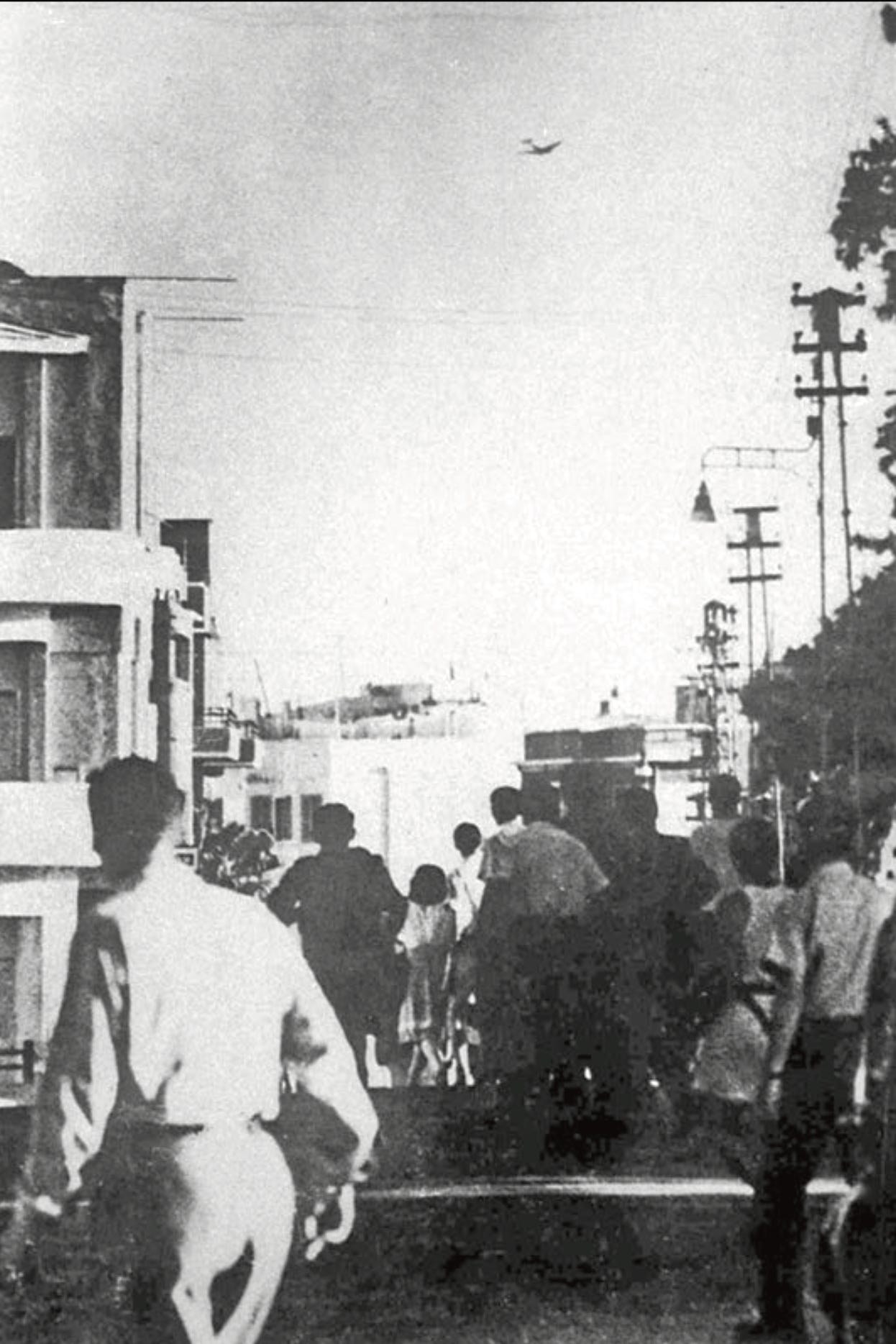
In a field where memoir, patriotic memory, and official reporting often overlap uneasily, Nicolle and Gabr know the difference between honoring a combat generation and repeating every wartime boast. They preserve the excitement of the moment while also keeping their historian’s skepticism. That balance runs through the entire volume.
The Royal Egyptian Air Force Under Pressure
One of the real delights of this book is the portrait it offers of the REAF at a formative moment. This is not yet the air force of later state spectacle, later procurement cycles, or later institutional polish. It is a much smaller, leaner, rougher service, operating with limited resources and relying heavily on improvisation, nerve, and the skill of a relatively small cadre of pilots.
The book captures that atmosphere brilliantly. There was only one small airfield at al-Arish. The Egyptians had begun the war with six Spitfires, and by the second phase of fighting that number had risen to thirteen there. Pilots flew by day, usually in pairs, one attacking and one covering. These are the kinds of details that instantly bring a force to life. They tell us not only what aircraft Egypt possessed, but how those aircraft were used, how thin the margin of error was, and how quickly each mission could become a test of judgment.


Again and again, the book reveals a service adapting under fire. Recognition markings had to be improvised and later standardized. Commanders had to redirect air support during battle as conditions changed on the ground. Tactical flexibility was not a slogan. It was a necessity. In one of the book’s most revealing passages, the fighting around Negba becomes a case study in this. Air support that had initially been directed toward suppressing enemy positions inside the colony had to be reoriented to strike advancing reinforcements from multiple directions.
The tactical air commander, as described in one contemporary account reproduced in the book, chose to ignore repeated requests to continue flattening the strongpoints inside Negba and instead focused on cutting off the forces rushing to save it. Whether every claim in the after-action reporting was accurate is beside the point. What shines through is the culture of flexibility that officers were already trying to define and praise.
That is one of the most exciting aspects of the volume. It is not merely chronicling combat. It is recording an institution talking to itself about how to fight.
Negba, Al-Arish, Abu Zaid
If the book has a dramatic center of gravity, it lies in the operations around Negba on 12 July. The authors reconstruct this day with an almost cinematic sense of buildup and motion. Ground forces attack under artillery cover. Tanks move forward. Infantry runs into fierce resistance. Reinforcements arrive. Air sorties are launched one after another in support. Reports flow back to al-Arish. The air force tries to hold open the battlefield for an Egyptian success that never fully materializes.
It is a gripping sequence, and it gives several figures room to emerge from the historical record as personalities rather than names in a roster. Muhammad Abu Zaid, in particular, comes across as a commanding presence. He appears here as a hard-driving, operationally central pilot whose reputation clearly extended beyond routine competence. The book shows him flying multiple missions and later becoming a heroic figure in Egyptian memory, though not without the embellishments that official and popular storytelling often add. He is one of several men in this volume who stand at the border between lived experience and national legend.
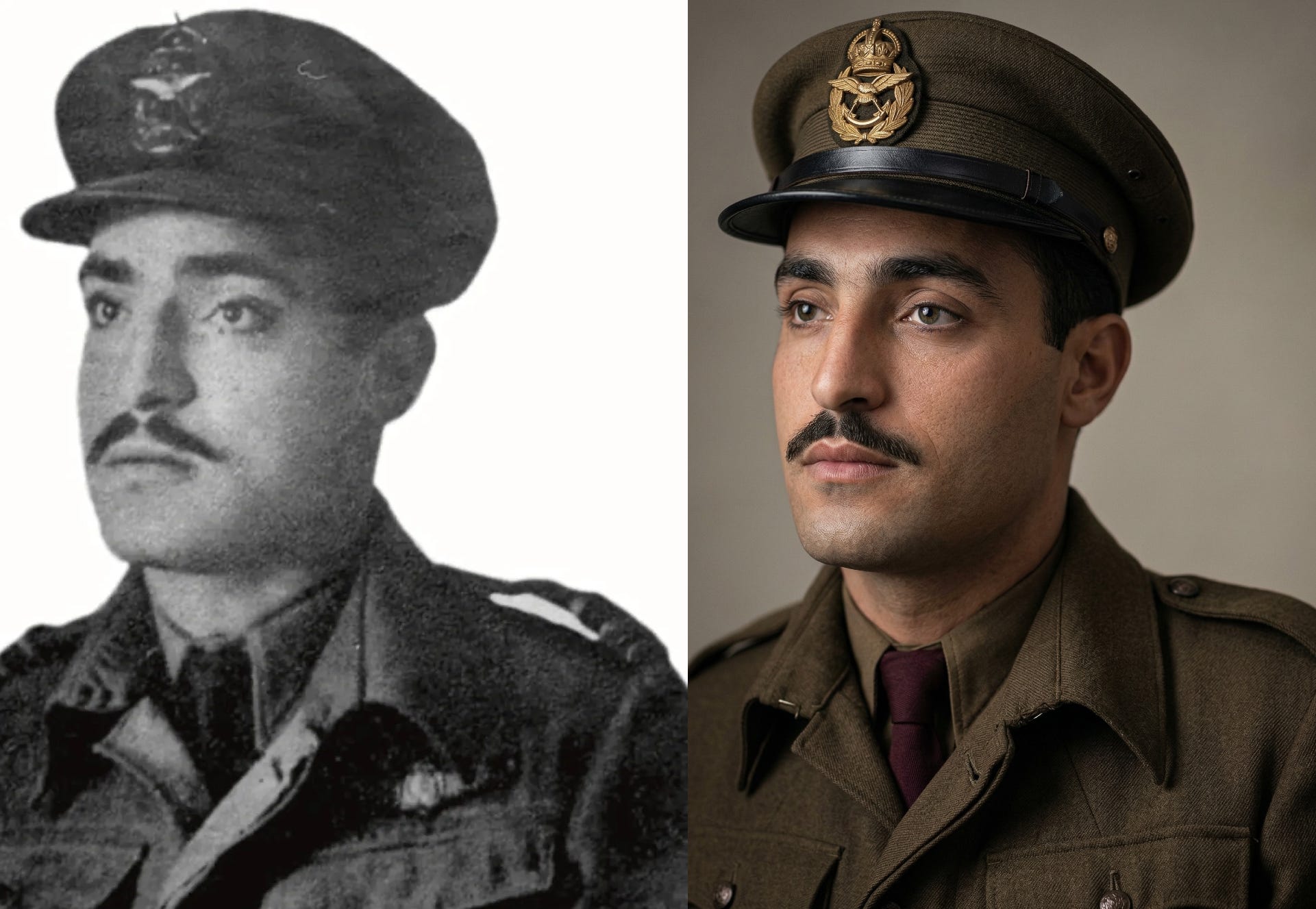
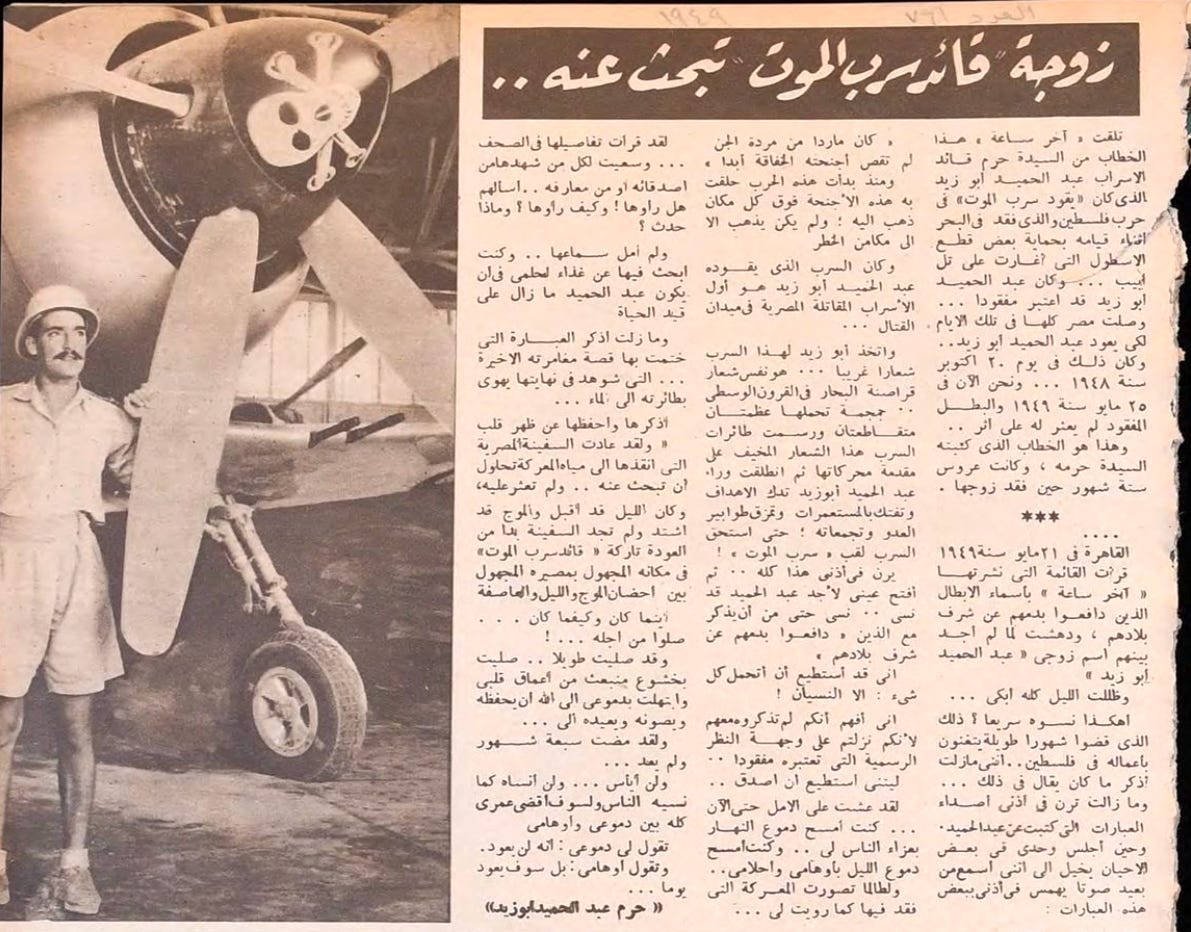
The story of Muhammad Abu Zaid does not end in the operational record. It slips into something darker and more intimate. After flying repeated missions in July and emerging as one of the most forceful personalities in the REAF’s fighter force, he would later disappear, lost at sea during the war (presumably on 19 October 1948), his body never recovered. In the months that followed, his wife published a haunting letter, which I found in Akher Saa magazine on 25 May 1949, searching for answers in the absence of a body, a grave, or certainty. She wrote not as the widow of a confirmed martyr, but as someone suspended between hope and loss, refusing to accept a final ending. By then, Abu Zaid had already begun to pass into legend, remembered as the commander of the “Death Squadron,” a figure shaped as much by memory and myth as by the combat reports that recorded his sorties.
There are many such moments. Kamal Zaki’s recollections are especially valuable because they cut through abstraction. His brief account of al-Arish, the size of the force, the pattern of flying, and the main aerial opposition says more in a few lines than pages of generic military description ever could. You come away with a feel for tempo, scale, and the everyday intensity of operations.
The authors are also very good at capturing atmosphere. One of the best examples is a description of the operations room, likely at al-Arish, where orders, maps, radios, aerial photographs, and bomb trolleys all crowd into the same charged space. Soldiers in blue uniforms push bombs manufactured in Egyptian factories. Messages for the enemy are written sarcastically on the bombs. Pilots enter and leave. Reports are received and interpreted in real time. It is a marvelous scene because it gives the war sound, weight, and texture.
The Arab Story in Full View
Another strength of the volume is its refusal to isolate Egypt from the wider Arab effort. The war here is regional. The Arab Legion appears as a major actor, not a footnote. Iraqi and Syrian air activity is tracked. Sudanese and Saudi units surface on the ground. The result is a fuller and more honest picture of the Arab war effort, with its bravery, fragmentation, uneven coordination, and recurring political tensions.
This broader canvas is one reason the book deserves to be read not just as Egyptian military history but as Arab military history. The authors recover a campaign in which several Arab armies and air arms were trying to fight under difficult conditions, often with different doctrines, different levels of training, and different political burdens. That larger setting enriches the Egyptian story rather than diluting it.
It also highlights something essential about the REAF’s early identity. From the beginning, Egyptian air power was embedded in a regional theater. Its history was never purely national. It was shaped in coalition warfare, in inter-Arab coordination and friction, in campaigns where Egyptian pilots were supporting ground actions that were part of a wider Arab front. For readers tracing the longer story of the Egyptian Air Force, this matters a great deal. The habits of regional military engagement were present at the start.
The Visuals Are a Major Asset
This is also a visually beautiful book. That should be said clearly because the illustrations are not decorative filler. They are one of the volume’s major strengths.
The maps are excellent. Clear, readable, and intelligently deployed, they orient the reader without burying them in clutter. The map showing territorial control in Palestine as of 11 June 1948 gives immediate strategic context. The reconstructions of Operation Dani and of Egyptian-Israeli operations along the southern-central lateral axis are equally useful. Good military cartography can rescue a reader from confusion in seconds, and these maps do exactly that.
The photographs are even more rewarding. The book contains a number of images that aviation enthusiasts will linger over. The photographs of REAF Spitfire LF.Mk IXs are especially striking. You can see camouflage patterns, worn surfaces, fuselage bands, and the physical reality of aircraft that were already weathered by service. These are not anonymous illustrations. They allow the reader to study the machines themselves as historical artifacts. One can almost feel the heat, dust, and maintenance strain embedded in them.
The visuals also widen the emotional range of the book. There are aircraft, of course, but also portraits, troop scenes, operational environments, and visual fragments that help reconstruct the world in which these men fought. The artwork and color plates are handled with similar care. This is the sort of military history volume that rewards slow reading because every few pages offer something worth stopping for. Anyone interested in aircraft markings, camouflage, visual culture, or the material history of Arab air forces will be delighted.
Quite a lot of military history books still treat visuals as padding. This one uses them as part of the historical argument. The images deepen the archive.
More Than a Combat Record
What lingers after reading this book is not just the operational story, but the sense that one is witnessing the earliest shaping of Egyptian air force culture. The contemporary discussions reproduced in the volume, including material from the REAF’s own magazine, are especially revealing. Officers were already trying to derive lessons from combat while the war was still unfolding. They wrote about initiative, speed of thought, flexibility, and the willingness to adjust plans under pressure. Those are not small details. They are windows into a service educating itself in real time.
That is why this volume has value beyond its immediate subject. Readers who have followed the later history of the Egyptian Air Force will recognize early versions of much that came afterward: the celebration of daring pilots, the tension between operational reality and public claims, the premium placed on adaptability, and the effort to turn wartime experience into institutional memory.
There is also something moving about the archival labor behind the book. The dedication to Air Commodore Abdel Moneim Miqaati carries a quiet emotional charge. So does the long bibliography and the evident dependence on interviews, private correspondence, memoir fragments, unpublished studies, and rare operational material. This is the work of historians who have spent years gathering a disappearing record before it vanished altogether. That care shows on every page.
A Volume to Cherish
This is one of the strongest books in the series and one of the most rewarding for anyone interested in the roots of Egyptian air power. It combines operational depth, serious archival work, vivid storytelling, and superb visuals in a way few military histories manage. It takes us back to the beginning without stripping away complexity. The REAF that emerges here is brave but limited, energetic but overstretched, capable of tactical imagination yet still vulnerable to inflated reporting and battlefield frustration. In other words, it feels real.
For readers who have been following this review series through the later decades of Egyptian air force history, there is something especially enjoyable about returning to this origin point. We already know some of what comes later. That knowledge gives this early chapter an added charge. We can see the seeds being planted. We can watch a force still in formation, still unsure of its eventual scale and status, yet already developing many of the traits that would mark its later career.
And on top of all that, it is simply a pleasure to read. The narrative has momentum. The details are rich. The photographs and maps are a feast. The scholarship is impressive without becoming dry. For anyone serious about the history of the Egyptian Air Force, the 1948 war, or Arab air power more broadly, this volume is not just useful. It is a book to celebrate, keep close, and revisit.